
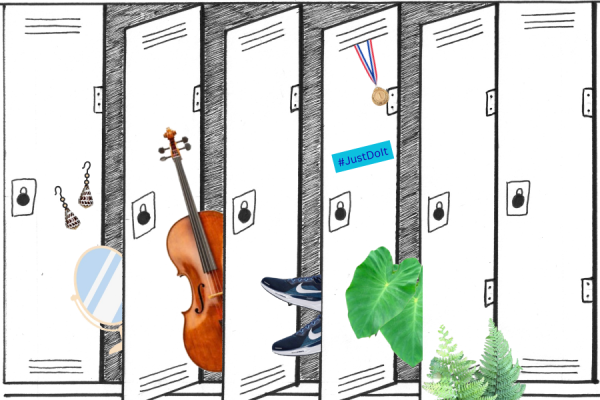
Behind the uniform


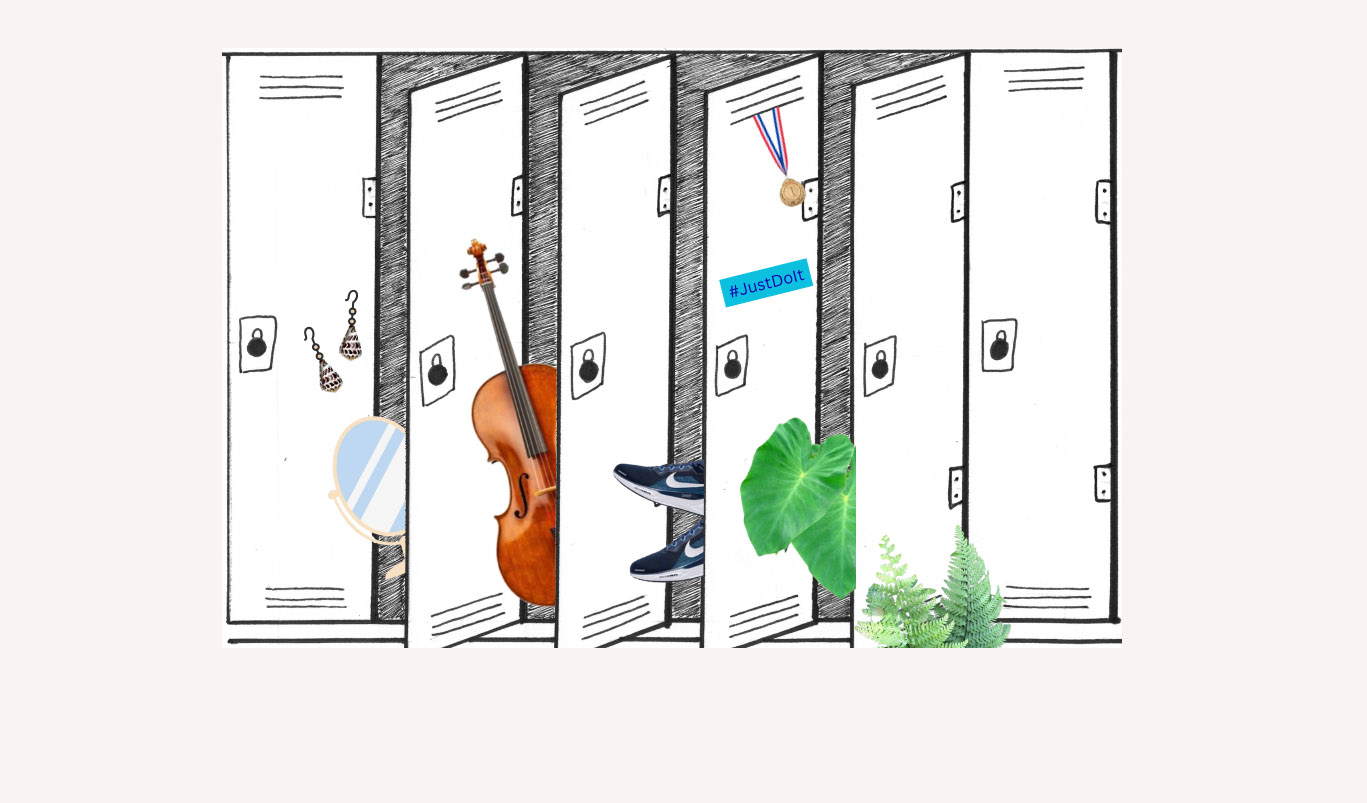
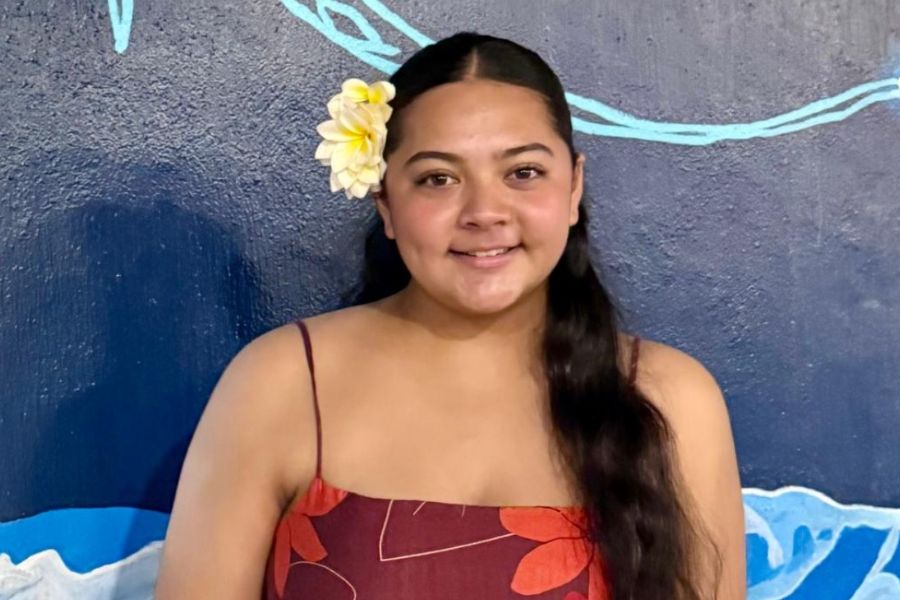
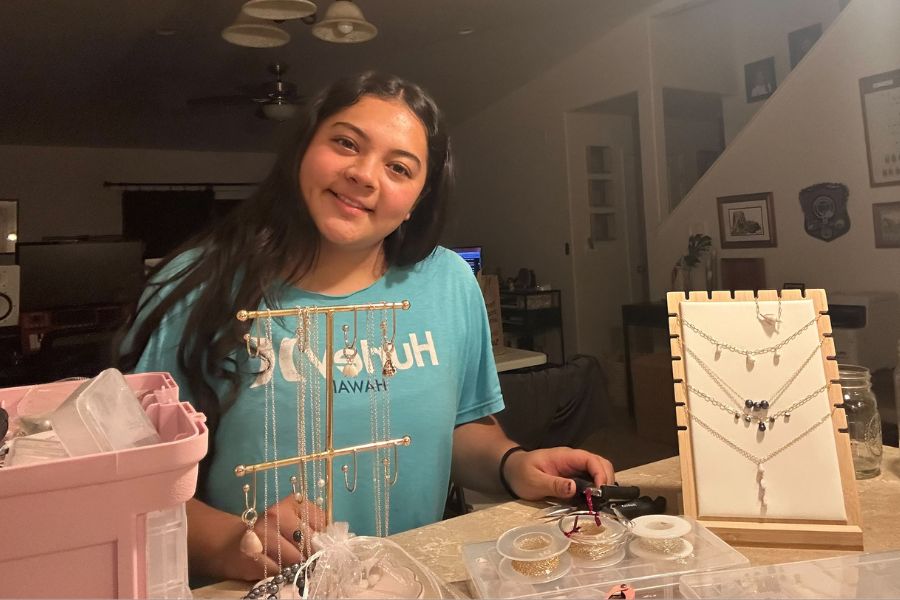
Senior Kahoa Kapuaʻala is expanding her craft through her Instagram jewelry business, Hoaloha Jewels.
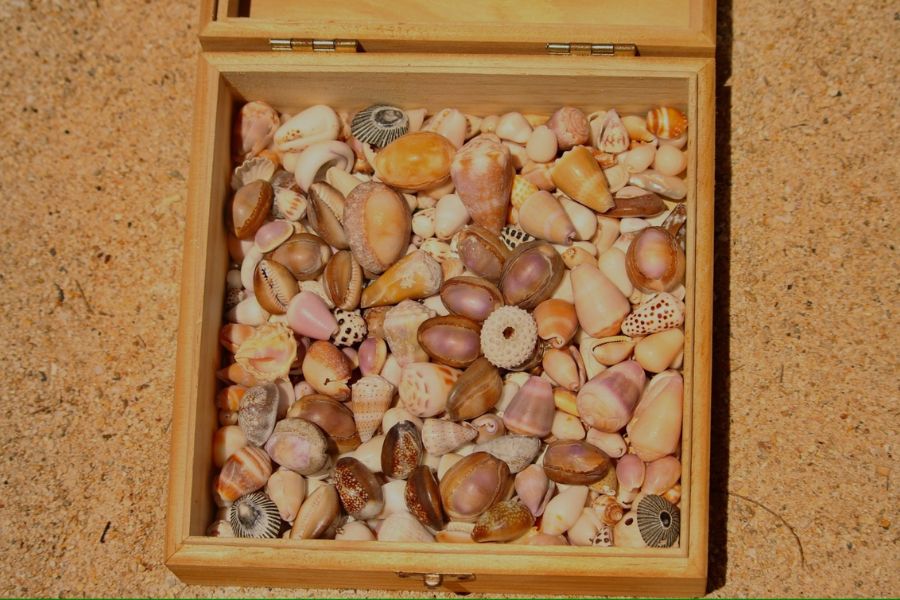
Kapuaʻala, with an abundance of delicately patterned shells, sought a way to prevent the precious trinkets from going to waste.
“It’s an Instagram business that I started last summer because I had this huge collection of shells,” Kapuaʻala said, so she found value in her available resources.
Kapuaʻala’s huge collection of shells comes from beach trips with her sister, where shelling was a pastime.
“Shelling has always been, like, a really passionate hobby of mine ever since I think 8th grade. … And yeah, so we collected this huge box, like this big,” she said, indicating the size with her hands, “like, the shelves were filled all the way to the top.”
Her inspiration was derived from other local businesses.
“I think my inspiration was definitely Instagram because I feel like that’s a place where lots of people will sell jewelry, especially in Hawaii,” she said.
Her advice for those interested in starting a business is to reach out for support and to read up on running a successful hustle.
“Definitely ask for support from your loved ones. They won’t mind investing small bits of money here and there to help jumpstart your business. Also, do your research. If you become an expert in your business, you will be able to thrive,” she said.
Operating Hoaloha Jewels has taught Kapua’ala quite a lot about being self-reliant.
“Her business is important because it’s helping her learn how to be independent and to get her own money. It also helps her live on her own, and because it’s her income, it helps her pay for things her parents no longer have to pay for. It also allows her to see what it looks like to have a job in the future,” said Kulia Kapuaʻala, Kahoa’s sister.
Each month, Kapuaʻala releases and sells a small collection, selling around 25-30 pieces. Prices run about $30.
She said, “I make a very good profit from my jewelry. I invest about $170 each month for new materials, and I make about a $600 profit from that initial investment.”
Through her time at Kamehameha Schools, she has learned a lot about marketing strategies.
“I definitely did a lot of research on other local jewelry brands. I observed their prices, methods of making their jewelry, materials, and marketing strategies. I also learned a thing or two from being a business academy student at KSM, like how to get a target market, and different marketing strategies, like e-commerce,” she said.
KSM haumāna: do you have a side hustle?
Sorry, there was an error loading this poll.
Supplying materials isn’t as simple as it may seem. Kapuaʻala advises against purchasing materials with a cheap price tag, as it often reflects their durability.
“Go for the higher quality materials because one thing about jewelry is you don’t want it to tarnish, right? You don’t want to go in the shower, and it turns green, or it makes your neck or wrist green. You want it to be like good quality gold and silver,” she said.
Managing a business, schoolwork, and athletics is not without its hardships. Besides shells and silver chains, there is one resource that’s in short supply: time. As a business owner, student and soccer and flag football athlete, she has learned to make the most of it.
“I love what I do, so any spare time I have, I’m basically making jewelry, but because I have, you know, five days a week of school, I have practice every day, including Saturday, I have games, and so it’s kind of hard to manage my time,” Kapuaʻala said.
Advertising for Kapuaʻala is heavily dependent on timing. She wants to expand her collection for holidays such as Valentine’s Day, to analyze opportunities to maintain sales.
Each collection Kapuaʻala produces is in tune with people’s wants, yet still holds a spark of personal style. Since she’s a high school student, she knows her demographic.
“I see her business going far because the more she does it, the more people will get to know her. Also, she’s a high school student, so she’s more in the know of what people her age want,” sister Kulia said.
Ultimately, Kahoa Kapuaʻala aspires to continue her jewelry business.
“I hope to continue selling jewelry as a side hustle in college. That way, I can make extra money on the side for myself,” she said.
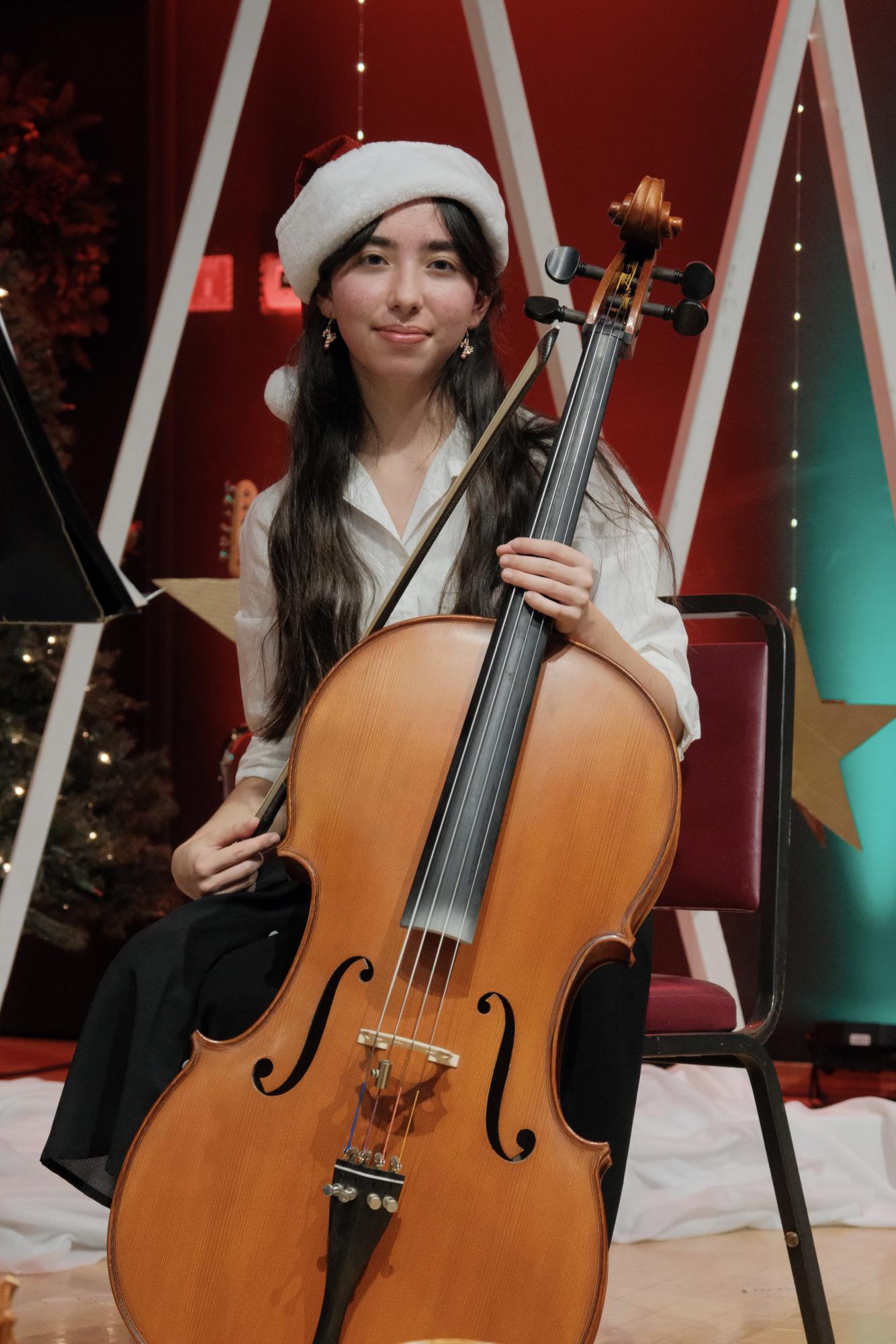
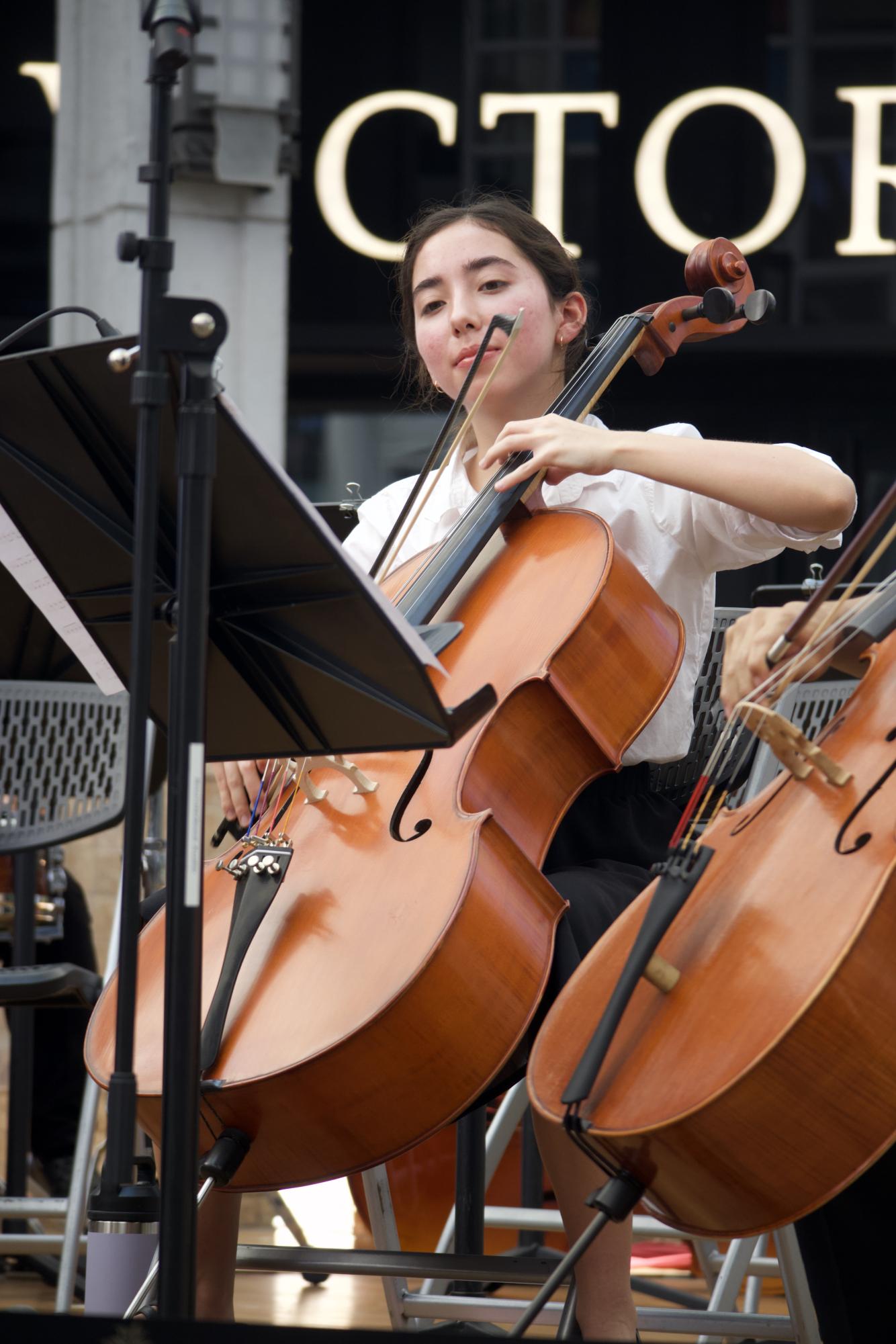
Avery Pendergraft settles into her chair, her fingers finding their familiar places on the neck of her cello. As she lifts her bow, she thinks of her grandfather—a pianist and music teacher who first planted the seed of music in her heart. With each draw of the bow across the strings, the sound fills the room, resonant and purposeful. This is more than practice.
“To me, the cello is my voice,” Pendergraft says. “It is my way of communicating with the world. Through playing the cello and music, I’m able to connect with others to share joy of music.”
On weekdays, she blends in like any other Kamehameha sophomore. But when the weekend comes around, her life looks very different. While most students are sleeping in or spending time with friends, the aspiring professional cellist is rehearsing, traveling between islands, and performing as a cellist with youth orchestras across Hawaiʻi.
Pendergraft is a member of the Maui Youth Philharmonic Orchestra and the Hawaiʻi Youth Symphony, which is based on Oʻahu. Between daily practice, lessons, rehearsals, and travel, her schedule is demanding, yet she continues to balance her commitment to music with school and life beyond performances.
“I practice about an hour a day on the cello and around 30 minutes for piano,” she says. With private lessons and orchestra rehearsals throughout the week, she spends about 15 to 20 hours a week on music alone.
Her weekends are especially full. Saturdays begin with a two-hour Maui Youth Philharmonic rehearsal, followed by piano lessons at the Maui Music Conservatory. Every other Sunday, she travels to Oʻahu for Hawaiʻi Youth Symphony rehearsals, often spending the entire day there.
“I usually fly out on the earliest flight and come back around 6:00 p.m.,” she says. “I usually go with my mom, but sometimes my dad.”
After breakfast with family, Pendergraft heads to Niu Valley Middle School, where rehearsals are held.
“It’s about two to three hours with the full orchestra, and we often have sectionals with a mentor for about an hour.”
Although the long days and travel can be tiring, she says the experience is worth it.
“It’s very rewarding because I get to play with a real orchestra and learn from great people.”
Her orchestra teacher, Ms. ʻIolani Yamashiro-Rahimi, has watched this dedication firsthand.
“She practices daily, and very consistently which is exactly what it takes to become excellent at anything,” Ms. ʻIolani notes. “She even practices at the same time every day! That amazes me!”
That consistency has paid off. Pendergraft auditioned for the Hawaiʻi Youth Symphony (HYS) on Oʻahu and was selected for the Concert Orchestra—a significant accomplishment, especially for a student from a neighboring island. HYS offers multiple orchestral levels, all highly competitive, and acceptance into any ensemble is no small feat. She plans to audition again for the 2026–2027 season, aiming for HYS II or possibly beyond.
On Maui, Pendergraft is one of five students in the Concert Strings Ensemble of MYPO performing at a high level. The group was recently invited to perform with the Maui Pops Orchestra, a professional ensemble, for a classical work in March 2026, an honor that reflects their musical maturity. Though she will be traveling to Japan that same day to visit colleges where she hopes to pursue a major in cello performance, the invitation itself is a testament to how far she’s come.
Playing the cello is a demanding craft.
“There’s two main components of the cello, which is the cello itself, as well as the bow,” she explains. “You hold the bow in your right hand, and you balance the cello on your body, and you create sound using the bow.”
Pendergraft first began playing in the sixth grade, when Kamehameha Maui still had an orchestra department. Her inspiration came from her grandfather, whose encouragement sparked her love for music. Since then, that love has only grown stronger.
“I think about the reason why I began music and cello in the first place, the joy it gave me,” she shares. “I really want to share that joy of music with others, so I keep pushing forward.”
For her, the cello provides something no other activity can.
“Playing the cello gives me a chance to express myself freely through how I play the music.”
Music has also shaped how Pendergraft approaches other important parts of her life. One of the biggest lessons she has learned is the importance of discipline and commitment.
“You won’t get any better until you actually put in the effort to practice,” she says, adding that this mindset carries over into everything she does.
Her band teacher, Kumu Jess Eimen, has seen this philosophy in action.
“Avery’s involvement in band strongly reflects her character, particularly her resilience and embodiment of kuʻupau,” Kumu Eimen extends. “She does not quit when faced with setbacks and continues working until the result meets a level of quality she believes is worthy of the name Kamehameha.”
That perseverance shows up not just in performance, but in leadership. Pendergraft has stepped into the role of an alakaʻi for the drumline, helping teach the percussion section their marching cadence. This is a symbol of unity and collaboration as they march the two-time Division II football champions onto the field.
But perhaps her most significant contribution is her work as an arranger. On her own time and through her own research, she creates Hawaiian arrangements for the band ensemble, thoughtfully designing traditional mele Hawaiʻi in ways that make them accessible among the Western-based compositions that they practice.
“This type of work not only requires both strong musical skill and deep cultural awareness, but more importantly a level of maturity both as an individual and a musician to accomplish,” Kumu Eimen says. “Avery has grown tremendously in balancing those responsibilities with care and intention, and the quality of her work far surpasses her age.”
Ms ʻIolani echoes this sentiment.
“Avery’s involvement in the orchestra reflects her character in ways that I wholeheartedly appreciate every week. She arrives early without fail, helps set up the space, and always brings a positive and joyful attitude! She plays passionately and with genuine care, showing her love for playing the cello and the music she is creating.”
Pendergraft also helps younger students by playing along with them during concerts, motivating and inspiring them to want to become helpers too.
“This takes extra time, patience, and energy,” Ms ʻIolani notes. “This definitely takes a giving heart!”
In addition to music, Pendergraft is deeply committed to studying Japanese. She studies daily and takes lessons twice a week with a teacher who lives in Japan. Each year, she takes the Japanese Language Proficiency Test at the University of Hawaiʻi at Mānoa.
“I usually study about an hour a day, but as the tests come up, I try to study two to three hours,” she says. She has already taken two of the five levels and recently completed the N4 exam.
“I put so much time and effort into studying, so I’m pretty nervous while taking them,” she says. “But I think about how amazing it would be to pass and prove that I’m accomplishing my goals.”
Balancing Japanese studies with music is not easy.
“It’s pretty difficult sometimes, especially if lessons take up most of my afternoon and evening,” Pendergraft says.
To manage it all, she finds time wherever she can, including studying on the bus to school or during spare moments in class.
Despite the packed schedule and constant commitments, she persists, driven by her love for music, her passion for learning, and the personal growth that comes with both.
For students who are thinking about picking up an instrument or trying a new hobby, she encourages them to step out of their comfort zone and give it a chance. When it comes to the cello, she reminds others not to be intimidated by its appearance.
“They should do it because it’s a really great instrument,” she says.
Pendergraft’s story is a reminder that many students carry extraordinary passions far beyond what we see in the classroom. Behind the royal blue Kamehameha uniforms and eight-hour school days are individuals dedicating countless hours to their craft, quietly building discipline, confidence, and purpose.
For this gifted musician, the cello is not just part of her weekend routine. It is a defining part of who she is, her voice in a world that is listening.

The mid-day sun beats down on the path. Nervous, adrenaline pumping through their veins, runners gather in the starting box. Waiting with bated breath, crouched and ready to sprint, — POP! — the gun fires, and the racers are off.
One runner takes the lead. Meters in front of the rest, she races steady-paced, pushing forward. Soon enough, she reaches the finish line, and the crowd cheers her name.
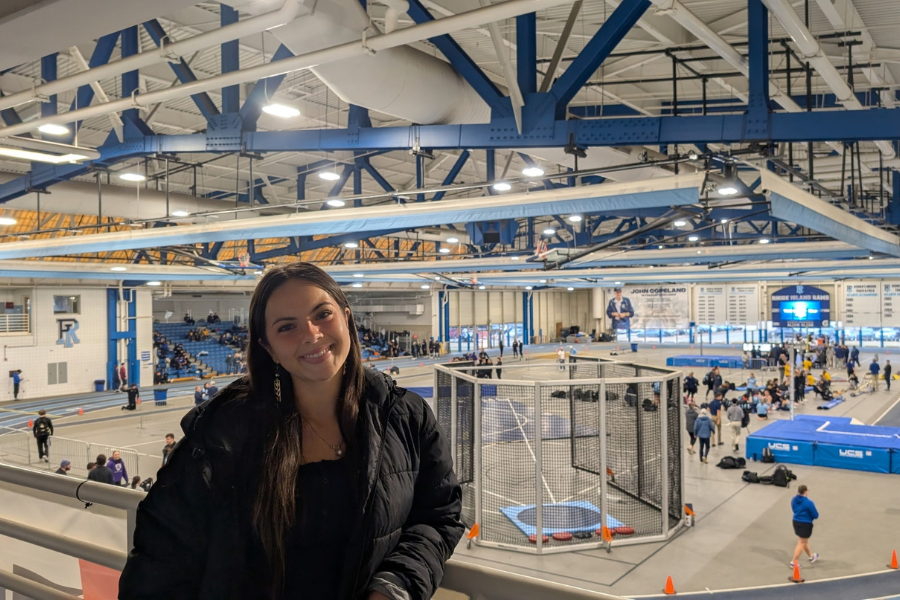
Sophomore Keilana Maldonado might very well be the next Olympic cross-country and track star. She’s been a trailblazer, quite literally, running national times and participating in country-wide competitions such as the Junior Olympics.
“I like running because it taught me that growth doesn’t come from winning easily, but from being challenged and choosing to show up anyway,” Maldonado explains.
One of her biggest mentors and supporters is her father.
“Keilana has never been a naturally gifted athlete. Although she’s always had remarkable energy and stamina, coordination never came easily to her,” Anthony Maldonado, Keilana’s father, says. “However, she more than makes up for that in competitiveness, resilience, and sheer grit.”
Constantly by her side, the runner’s father has supported Keilana from her humble beginnings to her now-bright future.
Soon after the pandemic of COVID-19, Keilana began to run in island-wide track meets hosted by Valley Isle Road Runners. Not long after starting, she drew the attention of her coach.
“I was a stand-out because I was the only one running national times,” she recalls.
While there is no single national qualifying time, bandwidths exist instead, determining how advancement is earned through a series of qualifying meets.
So far, the runner’s personal bests are 2:22.08 for the 800m, 4:53.83 in the 1500m, 11:55.21 in the 3000m, and in the 5K or cross country event, 19:23.
The following year, Maldonado participated in the USATF National Youth Junior Olympic Championships in New York upon her coach’s suggestion.
The United States of America Track and Field is the official sanctioning body for organizing competitions and overseeing elite athlete development. They annually organize the National Youth Junior Olympic Championships, a country-wide track and cross-country meet for the best athletes in the nation.

“Coming from Maui, the competition at the time was a bit behind, and I was often winning races locally which gave me an insanely big ego,” the runner admits. “I believed this race would be an easy win, but I was mistaken. I ending up placing 34th in my main event.”
However, Maldonado didn’t let that defeat her — she worked twice as hard instead.
“Going to Junior Olympics really humbled me, showing me a much higher level of competition,” Keilana recalls. “That experience motivated me to push harder.”
Since then, Maldonado’s training regimen has become pretty serious.
“I train 5–6 days a week, approximately 8–10 hours weekly, depending on the season,” the aspiring track star says. Beginning with warm-ups and drills then executing a workout focused on speed and endurance and finishing with a cool-down, Maldonado’s routine prepares her for greatness on the track.
Still only a sophomore, she has two more years to go before college. There, she aspires to continue her journey.
“My times need to get a little bit faster, so I need to keep pushing towards that,” the runner says. Maldonado hopes to run cross-country and track at the collegiate level, and make times qualifying for college scholarships.
“My long-term goal is to run approximately 2:08 in the 800 meters by my senior year to be competitive for scholarships,” she said.
Competitive college 800m times typically begin at 2:10 or less depending on the division and program, and with her personal best for 800m at 2:22.08, the runner has to knock off just 15 seconds to get one step closer to achieving her dreams.
Running helps her learn from her mistakes and push forward through tribulations, promoting growth in not just sports, but in her life.
“Just keep going,” she says. “You’re gonna get to a point where you want to give up, but that’s just where you’re getting started.”
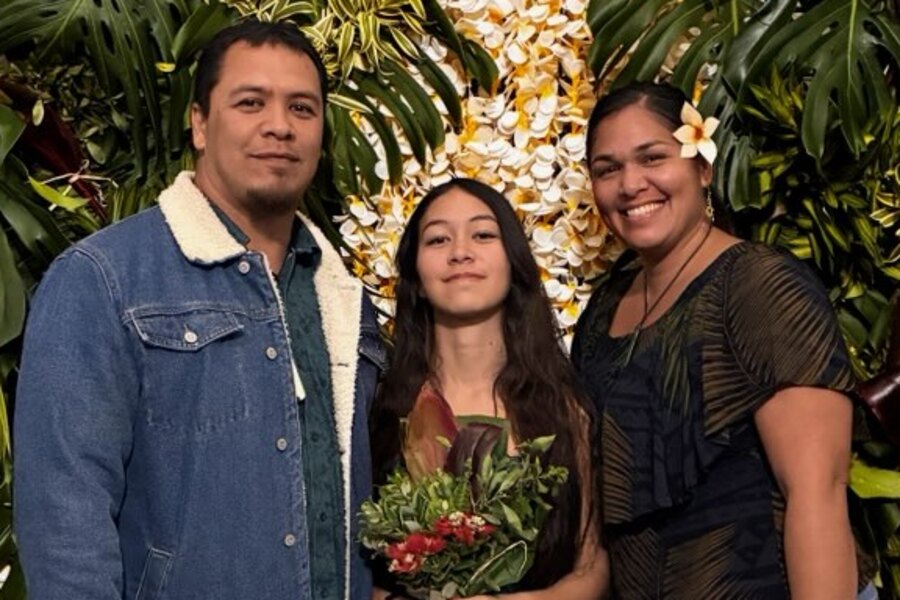
On the outside, life may seem normal for Junior Makaliahu Hewahewa. She wakes up to the buzzing of her alarm and gets dressed in her Kamehameha Schools uniform, ready to embark on another day of high school education, but outside of school, Hewahewa raises Native Hawaiian plants.
“I’ve been farming for pretty much my whole life,” she said.
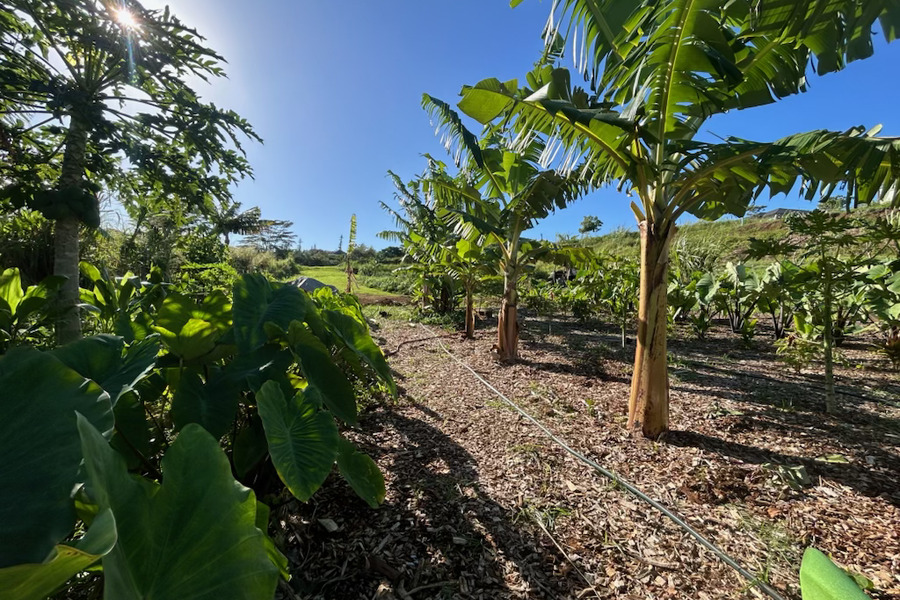
In a bustling world of modernization, Hewahewa has her family farm to tend to as a retreat. This sanctuary is filled with Hawaiian flora growing earnestly as the bright Haʻikū sun shines throughout the rows of kalo, lāʻī and maiʻa.
She and her family spend three hours after school and work every day on a technique called Poly-forestry or Polynesian Agroforestry. “Poly” also lives up to its meaning of “many,” indicating the mix of plants rather than a focus on a single crop.
“It involves growing plants that work well together side by side and next to each other, making a healthier way for them to grow and develop,” Hewahewa said.
Tasks on the farm are distributed within her family. From mulching and planting to the occasional mowing, Hewahewa is already a seasoned farmer.
It may seem daunting, however, Hewahewa values this quality time that she gets to spend with her family.
Additionally, farming tasks are dictated by the moon phases.
“One week, chores could be planting, the next could be mulching, pruning, harvesting, or weeding,” Koa Hewahewa, her father, said.
The farm that occupies a lot of Hewahewa’s time is not the first farm her family has worked at.
“We’ve moved to a lot of farms, starting in a small loʻi kalo one down in Waiehu, up to a lāʻī farm in Waiheʻe, then to a much bigger farm in Makawao at Hōkūnui farms, and that one is the longest one we’ve stayed in,” Makaliahu said.
The Hewahewa family made 7-8 years of progress at the Hōkūnui farms, hosting classes for the community to learn about farming too.
Classes were taught by her parents, hosting different groups of people of all ages. They educated guests on traditional Hawaiian moon planting and beginning Hawaiian farming techniques.
For the past few years, she has been living at a 1/2-acre farming property in Haʻikū.
Farming is demanding and requires a lot of hours and dedication, but Hewahewa has her motivation.
“My inspiration is both of my parents and my papa [grandfather]. My parents have been working together for many years side-by-side, farming lāʻī, kalo, mamaki, et cetera, and [they’re] always moving from one farm to the next. Even though they do that, they always put in the same effort to every one they’ve been in,” she said. “That set me up to be a resilient person.”
It’s clear that her family has instilled an industrious attitude upon her, and they provide a firm foundation for her to build upon.
“Her help on the farm is crucial to our operations and we are very grateful,” Koa Hewahewa said.
She also acknowledges her grandfather or papa, David Hewahewa, who’s been with her family along their journey in farming.
“No matter how busy he is, he’s always been able to show up and help us with whatever it was, even without farming. And he’s inspired me to be a hardworking person,” Makaliahu said.
She also sees the importance of farming within the community.
“There are some days where I really just wanna lay around and not do any work, but then you really got to think about the impact you can make with farming. It’s the thing that can affect people and help people as well, along with the lāhui and the ʻāina.”
It goes beyond the everyday.
“Farming is what feeds us, and can be the thing that saves us in disaster,” Hewahewa said.
As the world continues to evolve, Hewahewa wants people to understand how important farming is for staying connected to the land.
“From it, I’ve learned to remember to stay strong and remember where we come from because in the end, we all really tie back to ʻāina,” and “when you give to the ʻāina and help it out, it’ll always be there to give back to you and help you out too.”





Kealii Mossman • Mar 7, 2026 at 6:36 am
Awesome stories of awesome ksm students. I really enjoyed learning more about the students that were profiled. The one thing they all had in common was not being afraid of hard work. It’s not often that you see any type of success without great effort. Keep grinding. You determine your own level of success. To both the profiled students and the authors of the profiles – good job. Color me impressed 👍🏼👍🏼😁